Banner of Truth
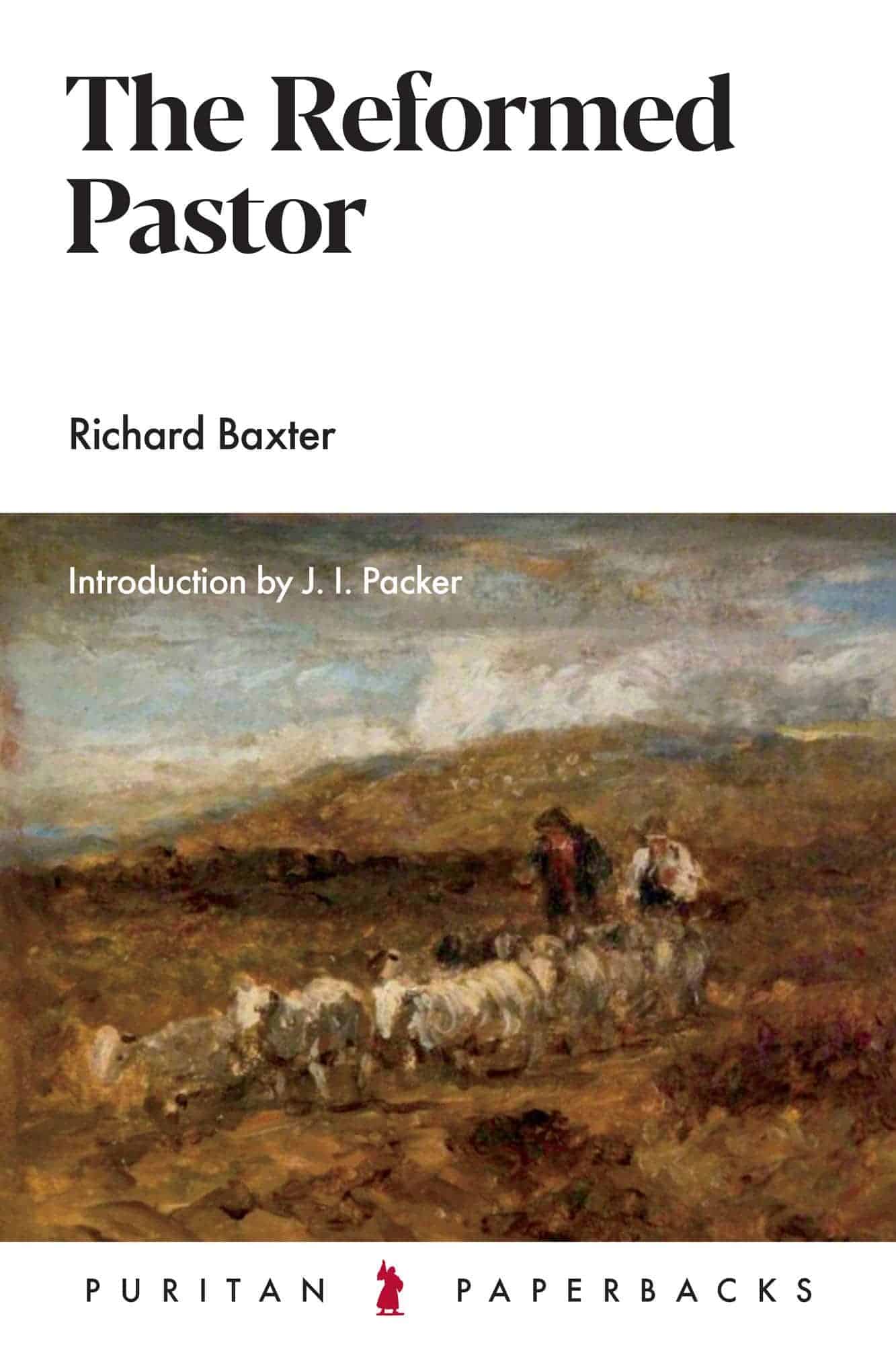
The Reformed Pastor
The Reformed Pastor
Couldn't load pickup availability
Richard Baxter was vicar of Kidderminster from 1647 to 1661. In an introduction to this reprint, Dr. J.I. Packer describes him as ‘the most outstanding pastor, evangelist and writer on practical and devotional themes that Puritanism produced’. His ministry transformed the people of Kidderminster from ‘an ignorant, rude and revelling people’ to a godly, worshipping community. These pages, first prepared for a Worcestershire association of ministers in 1656, deal with the means by which such changes are ever to be accomplished. In his fervent plea for the discharge of the spiritual obligations of the ministry, Baxter, in the words of his contemporary, Thomas Manton, ‘came nearer the apostolic writings than any man in the age’. A century later Philip Doddridge wrote, ‘The Reformed Pastor is a most extraordinary book…many good men are but shadows of what (by the blessing of God) they might be, if the maxims and measures laid down in that incomparable Treatise were strenuously pursued’.
Today, Baxter’s principles, drawn from Scripture, and reapplied in terms of modern circumstances, will provide both ministers and other Christians with challenge, direction and help.
Table of Contents
| Introduction: James I. Packer | 9 | |
| Preface: William Brown | 23 | |
| Dedication | 37 | |
| Introductory note | 51 | |
| 1. | CHAPTER I | |
| The oversight of ourselves | 53 | |
| Section 1 | ||
| The nature of this oversight | 53 | |
| 1. See that the work of grace be thoroughly wrought in your own souls | 53 | |
| 2. See that you be not only in a state of grace, but that your graces are in vigorous and lively exercise | 61 | |
| 3. See that your example contradict not your doctrine | 63 | |
| 4. See that you live not in those sins against which you preach in others | 67 | |
| 5. See that you want not the qualifications necessary for the work | 68 | |
| Section 2 | ||
| The motives to this oversight | ||
| 1. You have a heaven to win or lose as well as other men | 72 | |
| 2. You have a depraved nature as well as others | 73 | |
| 3. You are exposed to greater temptations than others | 74 | |
| 4. You have many eyes upon you, and there will be many to observe your falls | 75 | |
| 5. Your sins will have more heinous aggravations than other men’s | 76 | |
| 6. Such great works as yours require greater grace than other men’s | 77 | |
| 7. The honour of Christ lieth more on you than on other men | 78 | |
| 8. The success of your labours materially depends on your taking heed to yourselves | 80 | |
| 2. | CHAPTER II | |
| The oversight of the flock | ||
| Section 1 | ||
| The nature of this oversight | 87 | |
| THIS OVERSIGHT EXTENDS TO ALL THE FLOCK | ||
| 1. We must labour for the conversion of the unconverted | 94 | |
| 2. We must give advice to inquirers who are under conviction of sin | 96 | |
| 3. We must study to build up those who are already partakers of divine grace | 97 | |
| 4. We must exercise a careful oversight of families | 100 | |
| 5. We must be diligent in visiting the sick | 102 | |
| 6. We must be faithful in reproving and admonishing offenders | 104 | |
| 7. We must be careful in exercising Church discipline | 104 | |
| Section 2 | ||
| The manner of this oversight | 111 | |
| THE MINISTERIAL WORK MUST BE CARRIED ON | ||
| 1. Purely for God, and the salvation of souls | 111 | |
| 2. Diligently and laboriously | 112 | |
| 3. Prudently and orderly | 112 | |
| 4. Insisting chiefly on the greatest and most necessary things | 113 | |
| 5. With plainness and simplicity | 115 | |
| 6. With humility | 116 | |
| 7. With a mixture of severity and mildness | 117 | |
| 8. With seriousness, earnestness and Zeal | 117 | |
| 9. With tender love to our people | 117 | |
| 10. With patience | 119 | |
| 11. With reverence | 119 | |
| 12. With spirituality | 120 | |
| 13. With earnest desires and expectations of success | 121 | |
| 14. Under a deep sense of our own insufficiency, and of our dependence on Christ | 122 | |
| 15. In unity with other ministers | 123 | |
| Section 3 | ||
| The motives to this oversight | 124 | |
| 1. From the relation in which we stand to the flock – we are overseers | 124 | |
| 2. From the efficient cause of this relation – The Holy Ghost | 129 | |
| 3. From the dignity of the object which is committed to our charge – The Church of God | 130 | |
| 4. From the price paid Joy the Church – which he hath purchased with his blood | 131 | |
| 3. | CHAPTER III | |
| Application | 133 | |
| Section 1 | ||
| The use of humiliation | 133 | |
| 1. On account of our pride | 137 | |
| 2. Our not seriously, unreservedly, and laboriously laying out ourselves in our work | 146 | |
| (1) By negligent studies | 146 | |
| (2) By dull, drowsy preaching | 147 | |
| (3) By not compassionating and helping destitute congregations | 150 | |
| 3. Our prevailing regard to our worldly interests, in opposition to the interests of Christ | 150 | |
| (1) By temporizing | 150 | |
| (2) By too much minding worldly things | 151 | |
| (3) By barrenness in works of charity | 152 | |
| 4. Our undervaluing the unity and peace of the Church | 156 | |
| 5. Our negligence in exercising Church discipline | 163 | |
| Section 2 | ||
| The duty of personal catechizing and instructing the flock particularly recommended | 172 | |
| PART I: MOTIVES TO THIS DUTY | 173 | |
| ARTICLE 1 | ||
| Motives from the benefits of the work | 173 | |
| 1. It will be a most hopeful mean of the conversion of sinners | 174 | |
| 2. It will essentially promote the edification of saints | 176 | |
| 3. It will make our public preaching better understood by our people | 177 | |
| 4. It will make us more familiar with them, and assist us in winning their affections | 177 | |
| 5. It will make us better acquainted with their spiritual state, and enable us better to watch over them | 178 | |
| 6. It will assist us in the admission of persons to the sacraments | 178 | |
| 7. It will show men the true nature of the ministerial office | 178 | |
| 8. It will show our people the nature of their duty to their ministers | 180 | |
| 9. It will give the governors of the nation more correct views of the Christian ministry, and so may procure from them further help | 182 | |
| 10. It will exceedingly facilitate the ministerial work in succeeding generations | 185 | |
| 11. It will conduce to the better ordering of families, and the better spending of the Lord’s day | 186 | |
| 12. It will help to preserve many ministers from idleness and mis-spending their time | 186 | |
| 13. It will contribute to subdue our own corruptions, and to exercise our own graces | 187 | |
| 14. It will withdraw both ourselves and our people from vain controversies, and the lesser matters of religion | 187 | |
| 15. It will extend these various benefits to all the people in our several parishes | 188 | |
| 16. It will not even stop here, but is like to be a work that will reach over the whole land | 188 | |
| 17. The weight and excellence of the duty recommended | 189 | |
| ARTICLE 2 | ||
| Motives from the difficulties of the work | 192 | |
| 1. Difficulties in ourselves | 192 | |
| 2. Difficulties in our people | 193 | |
| ARTICLE 3 | ||
| Motives from the necessity of the work | 195 | |
| 1. It is necessary for the glory of God | 195 | |
| 2. It is necessary for the welfare of our people | 197 | |
| 3. It is necessary for our own welfare | 199 | |
| ARTICLE 4 | ||
| Application of these motives | 200 | |
| PART II: OBJECTIONS TO THIS DUTY | 212 | |
| PART III: DIRECTIONS FOR THIS DUTY | 231 | |
| ARTICLE 1 | ||
| Directions for bringing our people to submit to the exercise | 232 | |
| 1. Conduct yourselves in the general course of your life and ministry, so as to convince them of your ability, sincerity, and love to them | 232 | |
| 2. Convince them of the benefit and necessity of this exercise | 233 | |
| 3. Put catechisms into the hands of every family in your congregation, whether rich or poor | 235 | |
| 4. Deal gently with them, and avoid every kind of discouragement | 236 | |
| 5. Expostulate with such as are obstinate and disobedient | 237 | |
| ARTICLE 2 | ||
| Directions for prosecuting the exercise with success | 237 | |
| 1. Address a few words to them in general to mollify their minds, and to remove all offence | 238 | |
| 2. Take them one by one, and deal with each of them apart | 239 | |
| 3. Take an account of what each of them has learned of the catechism | 240 | |
| 4. Try by further questions how far they understand what they have learned | 240 | |
| 5. When you have tried their knowledge, proceed next to instruct them yourselves | 244 | |
| 6. If they appear to be unconverted, make some prudent inquiry into their state | 245 | |
| 7. Endeavour to impress their heart with a sense of their deplorable condition | 248 | |
| 8. Conclude with an exhortation to them to believe in Christ, and to the diligent use of the external means of grace | 250 | |
| 9. At dismissing them, mollify their minds by a few words deprecating anything like offence, and endeavour to engage the masters of families to carry on the work you have begun | 252 | |
| 10. Keep a list of your people in a book, with notes of their character and necessities | 253 | |
| 11. Through the whole course of the exercise, see that the manner as well as the matter be suited to the end | 254 | |
| 12. If God enable you, extend your charity to those of the poorer sort, before they part from you | 256 |